16 November 2026, by Niraj Nagar
Instagram likes but no orders: why social media isn’t selling your products
Followers, likes and comments feel like progress. But many brands put serious effort into social media and see very little of it in their sales.
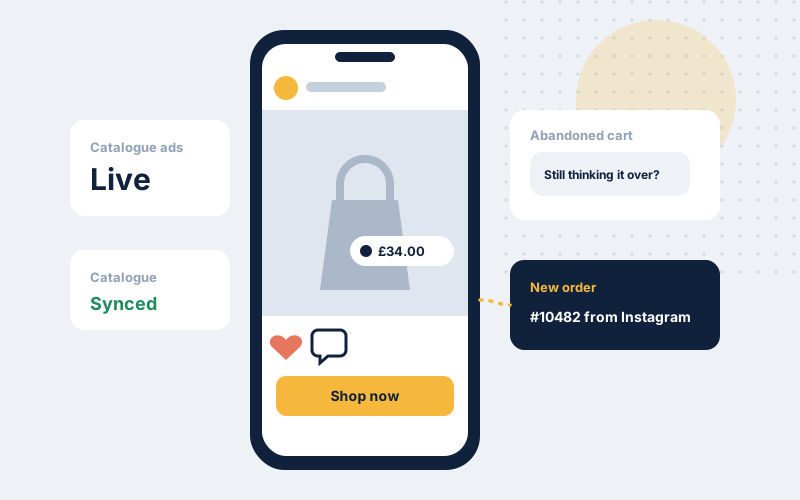
You post regularly. Your photos look good. People like them, follow you and occasionally leave a comment. By every visible measure, your social media is doing fine.
Then you look at where your orders come from, and social media barely registers.
This gap between attention and revenue is one of the most common frustrations for online brands. It isn’t usually a content problem. It’s that social media has been treated as a publishing channel, when it needs to work as a sales channel.
Engagement isn’t the same as buying intent
Someone who likes a post is enjoying it, not necessarily shopping. Social platforms reward content that keeps people scrolling, and that’s often not the same content that makes them buy.
Many brands end up optimising for the numbers the platform shows them (reach, likes, followers) because those are easy to see. Meanwhile, the number that matters, orders, sits in a different system that nobody connects back to the content.
The path from post to purchase is broken
Think about what happens when someone does want to buy. They see a product in a post. Is it tagged? Does the tag show the right price? Is it still in stock? Does tapping it lead straight to that product, or to the homepage? Does the store load quickly inside the Instagram browser? Do they have to log in or start their basket from scratch?
Every one of those steps is a point where interest turns into “I’ll look later”, and later rarely comes.
Your catalogue on social is out of date
Instagram and Facebook shops rely on a product catalogue. When it isn’t kept in sync with your store, shoppers see wrong prices, products that are no longer available, or missing items altogether. Ads built from that catalogue inherit the same problems.
It only takes one bad experience, tapping a product that turns out to be sold out, for a shopper to stop trusting what they see.
Ad performance has dropped and nobody knows why
Many brands saw their Meta Ads results decline and never found out why. Costs rose, results fell, and the usual adjustments didn’t help. Often the cause isn’t the creative or the targeting at all, but the conversion data being sent back to the platform. When the platform can’t see which ads lead to orders, it can’t find more people likely to buy.
Shoppers who leave are never brought back
Most people don’t buy on their first visit, whether they came from social or anywhere else. Without a way to bring them back (reminders, retargeting, follow-up messages), that first visit is the only chance you get. For many stores, a large share of genuine buying interest simply evaporates.
Why posting more won’t fix it
The natural reaction is to post more often or hire someone to manage the accounts. But if the path from post to purchase is broken, more content just means more interest leaking away at the same weak points.
Social commerce works when content, catalogue, ads, tracking and follow-up are set up as one connected system. That’s how we approach it for WooCommerce brands in the UK, US, Australia and the Gulf. Our free growth audit will show you where your social traffic is falling away.